Some projects begin with a script. Others begin with a place that refuses to leave your mind. My Arles short film began in 2024, during my first visit to the city for the Rencontres d’Arles photography festival and FUJIKINA. I arrived with a camera, an open schedule, and the intention to photograph—but I left with the first visual ideas for a film.
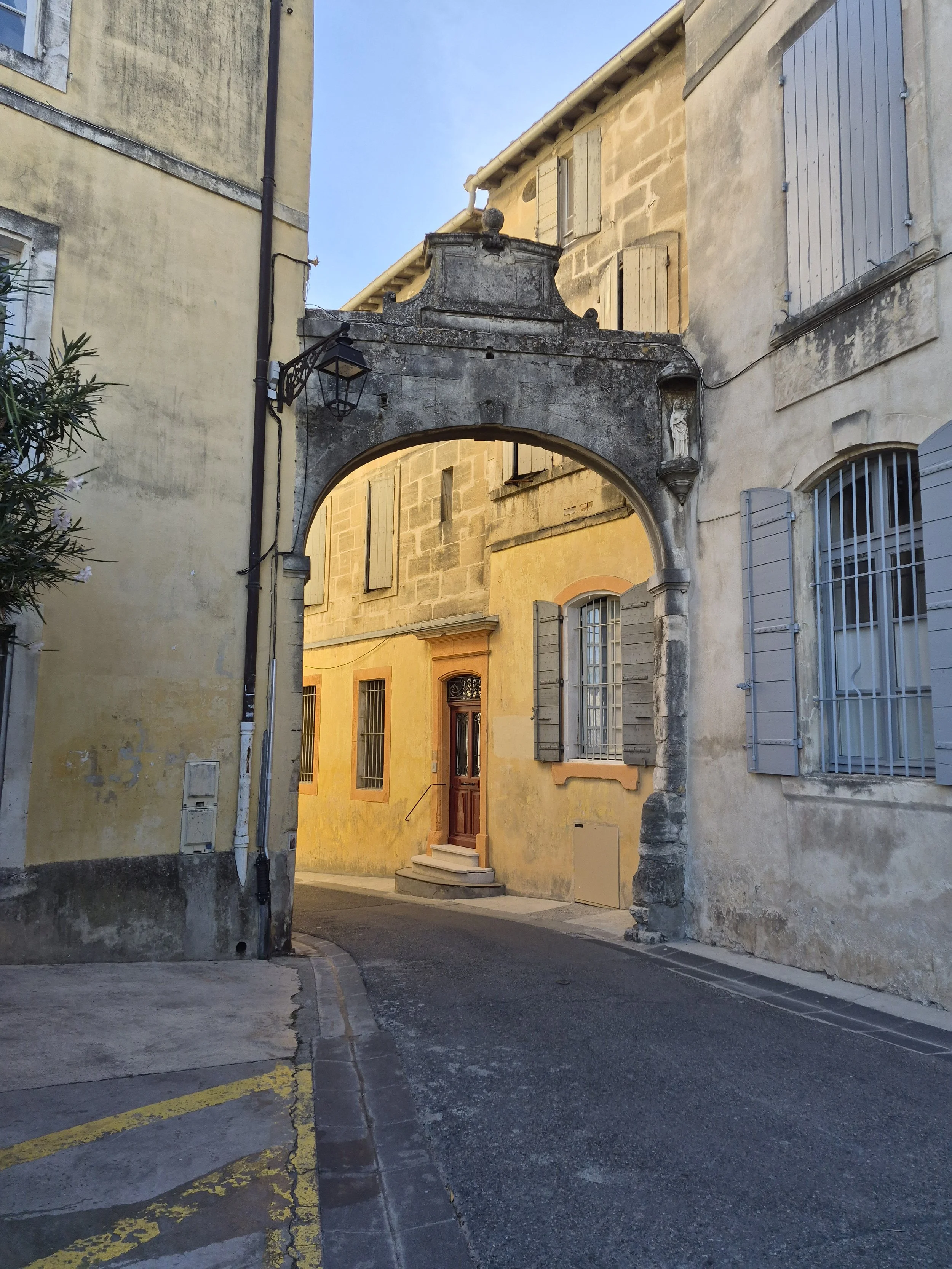
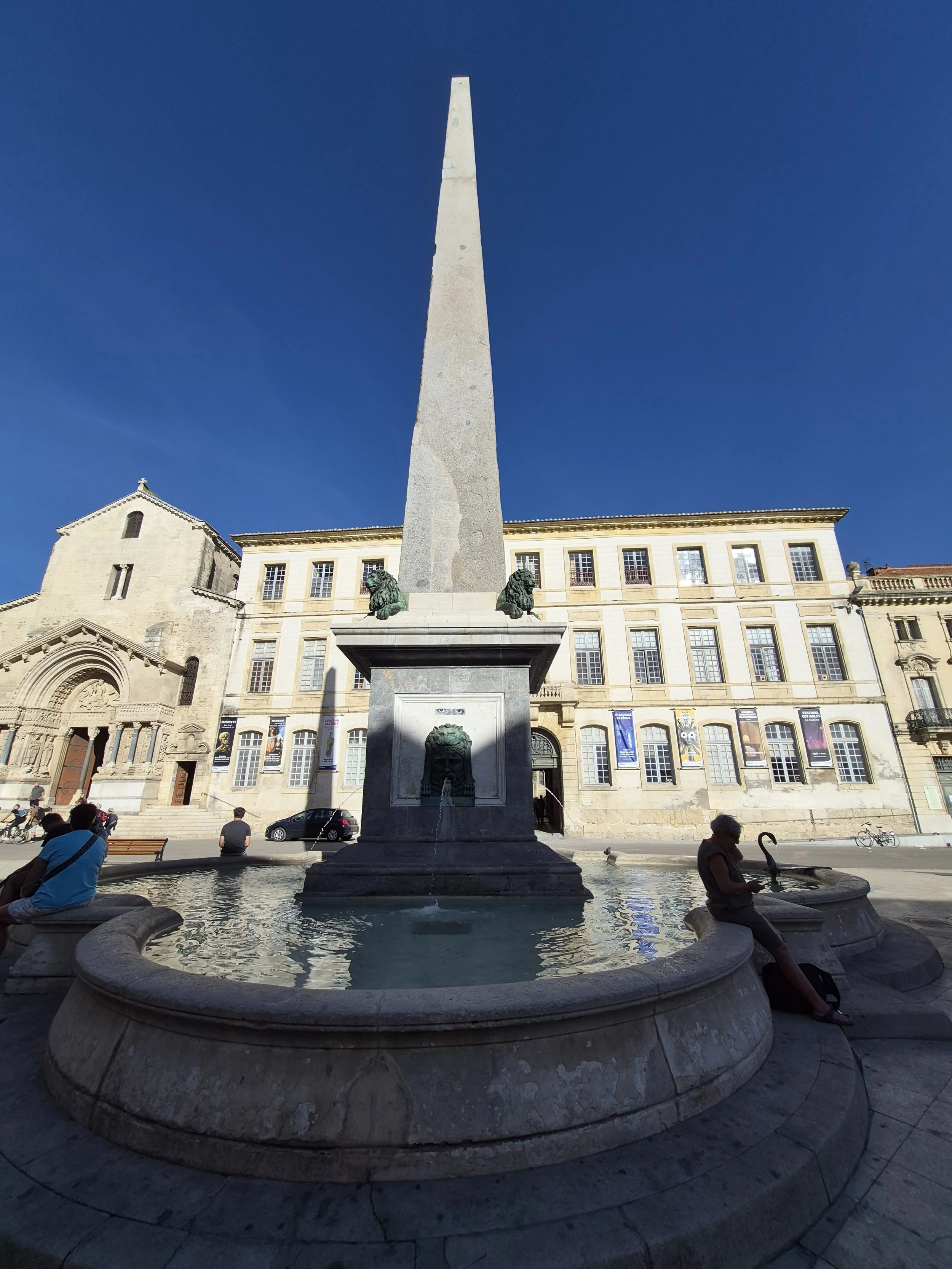
Arles is a city of layers: Roman stone, narrow alleys, warm ochre walls, strong southern light, deep shadows, café life, and the unmistakable presence of the Camargue just beyond its edges. For a filmmaker interested in architecture, urban space, and visual storytelling, it offers an extraordinary range of compositions within a very compact area. During that first visit, I photographed extensively and checked potential locations. Those images became more than documentation; they became the visual foundation for the short film.
From Photographs to a Film
The actual preparation for the film began in early 2026. By then, the impressions from Arles had had time to settle. I could return to the photographs, study the light at different times of day, and ask a more practical question: which places could carry a narrative, and how could we move between them efficiently?
Arles rewards preparation. Its streets can be busy, its light changes quickly, and many of the most interesting locations are close together but require thoughtful timing. Rather than attempting to cover too much ground, we developed a focused shooting plan around a small number of locations and visual motifs. The aim was not simply to show Arles, but to create a cinematic impression of its atmosphere: texture, heat, history, movement, and the relationship between people and the built environment.
A small production also demands flexibility. We needed equipment that was reliable, compact enough to move quickly, and capable of producing a refined cinematic image without slowing us down.
A Strong Equipment Partner
From the very beginning, Riwit Distribution, based in Regensburg, was a crucial partner. Their support went far beyond simply providing equipment. They understood the nature of a small, mobile production and helped us assemble a kit that could deliver professional results while remaining manageable for a three-person crew.
Riwit’s longstanding knowledge of cine equipment, combined with access to an extensive range of cameras, lenses, audio tools, monitoring systems, and storage solutions, made the preparation much smoother. Whether a production is a compact documentary-style shoot like ours or a larger commercial production, having a partner who can advise on the right combination of gear is invaluable.
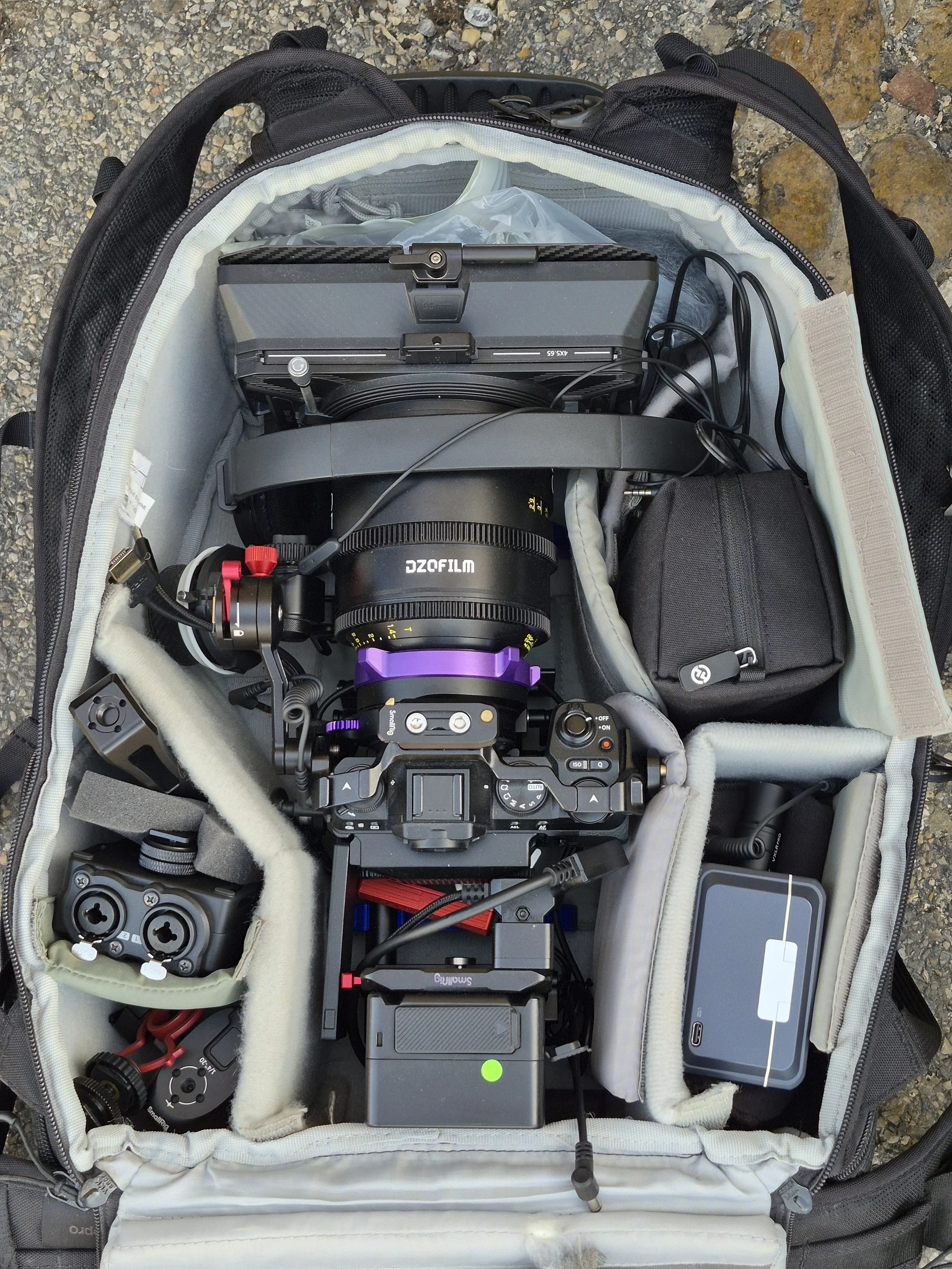
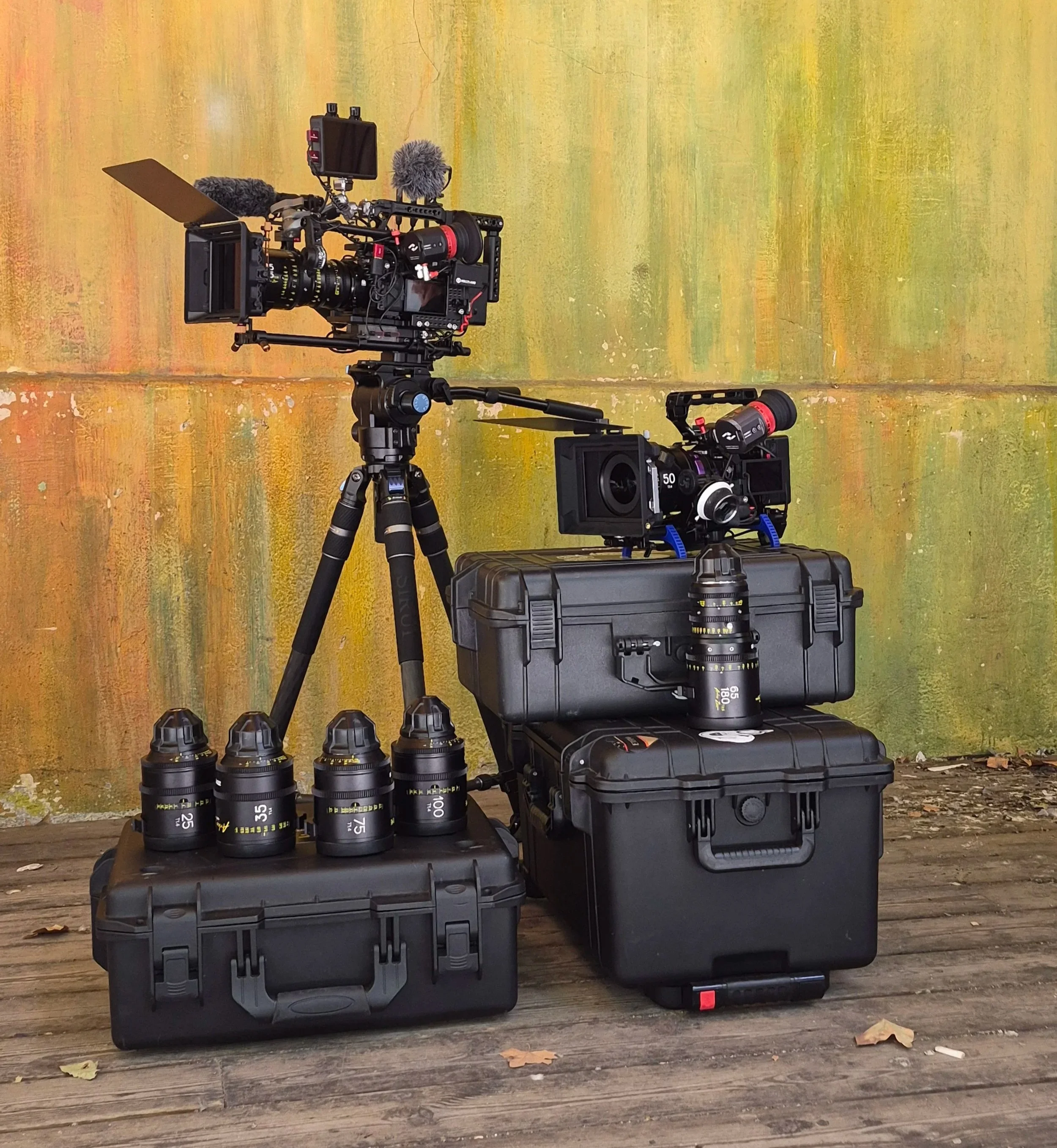
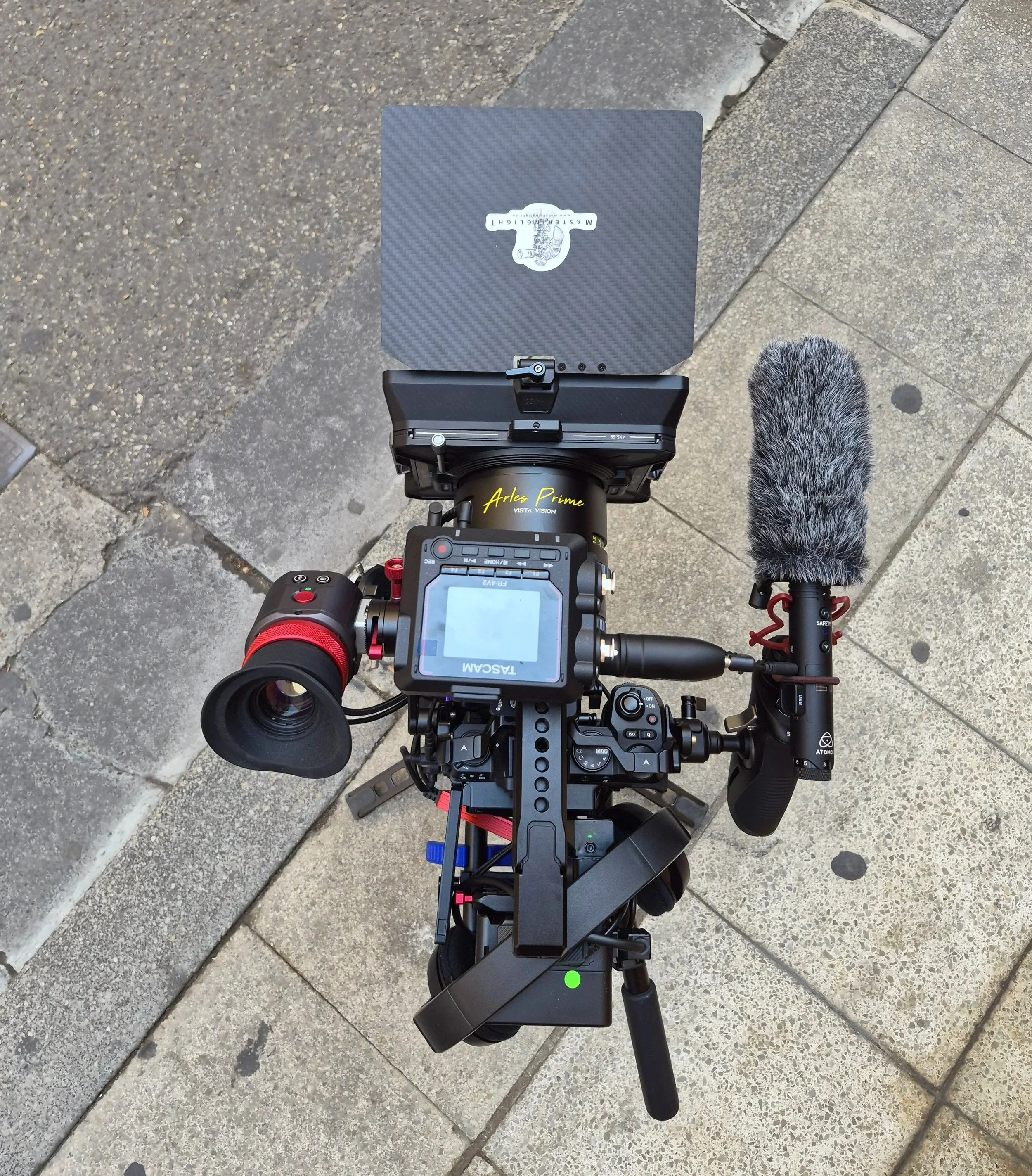
For Arles, the optical heart of the production was the DZOFILM Arles lens system. The Arles primes are full-frame/VistaVision cinema primes with a 46.5 mm image circle, fast T1.4 apertures, a 16-blade iris, and a consistent 95 mm front diameter across the range. Their low-saturation blue coating helps control flare and ghosting, while the optical design produces a soft, dimensional rendering with smooth focus transitions and characterful bokeh.
That character suited Arles perfectly. In the narrow streets, warm façades, and high-contrast southern sunlight, we wanted an image with presence and depth—not a clinically neutral look. The Arles lenses gave us a gentle cinematic softness without sacrificing detail or control.
The newly released Arles Zoom lenses added another level of flexibility. The 25–75 mm T2.6 and 65–180 mm T2.6 zooms together cover 25–180 mm, maintain a constant T2.6 aperture, and are parfocal, meaning focus is retained while zooming. Their 270-degree focus rotation, 100-degree zoom rotation, 0.8 MOD cine gearing, and shared 95 mm front diameter make them genuinely production-friendly.
For a small crew, this mattered enormously. The zooms reduced lens changes, allowed us to react quickly to changing compositions, and made it easier to work with matte boxes, filters, and follow-focus accessories across the Arles system.
Monitoring and Precise Control
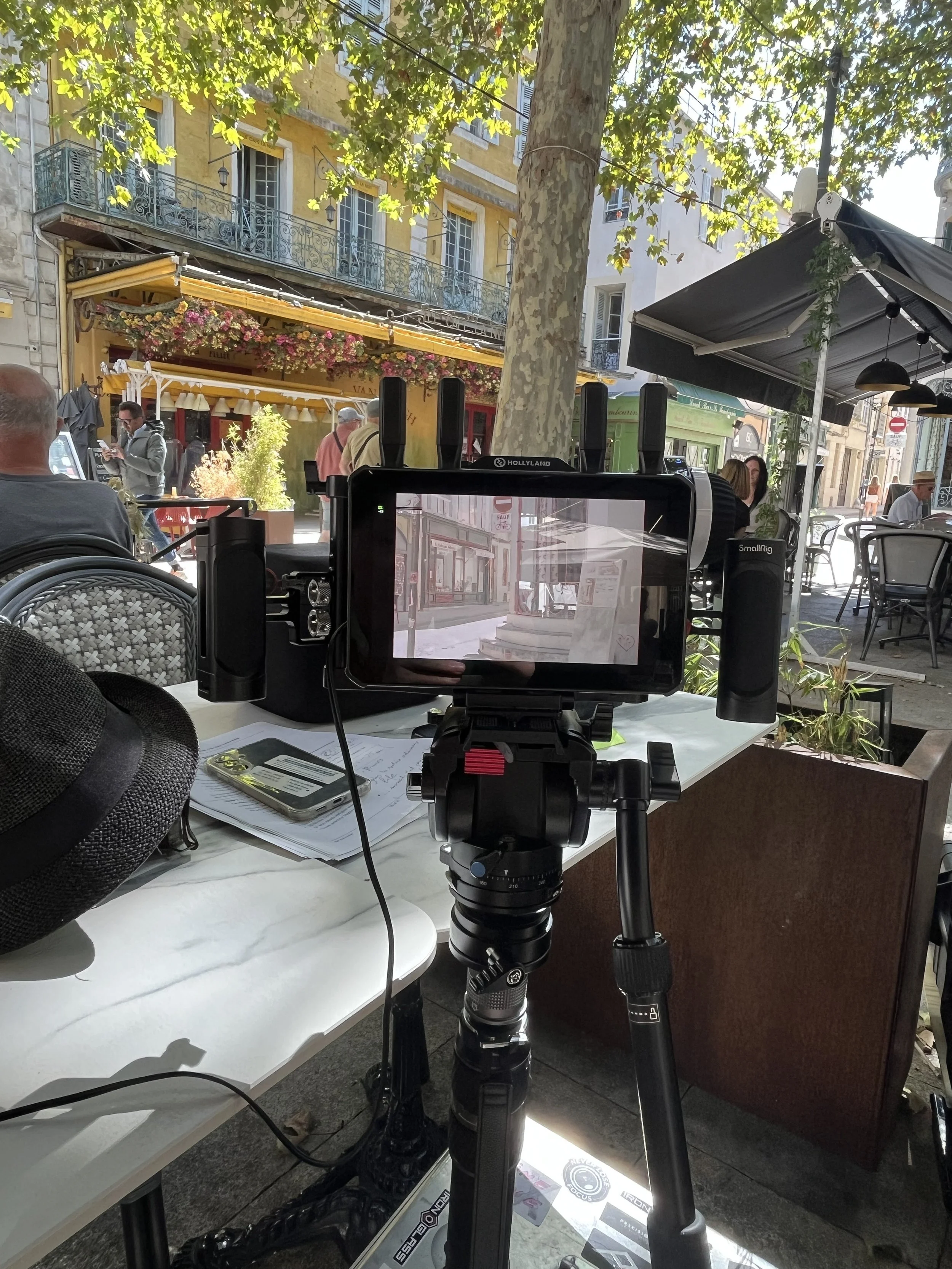
Precise composition and focus were essential, particularly when working quickly between locations. For this, we used the Hollyland Pyro 5 and Pyro 7 wireless monitoring and transmission system.
The Pyro 5 is a 5.5-inch, 1500-nit daylight-viewable wireless monitor that combines transmitter, receiver, and monitor functions. Its dual-band 2.4 GHz/5 GHz transmission, automatic frequency hopping, and Broadcast Mode—allowing one transmitter to feed up to four receivers—made it a dependable tool in a busy urban environment. It also supports direct camera control, proxy recording, and RTMP streaming.
The larger Pyro 7 provided a 7-inch monitoring surface and the same all-in-one transmitter/receiver/monitor concept. It offers up to 400 m line-of-sight transmission, 60 ms latency, dual-band wireless technology, professional image-analysis tools, LUT support, and HDMI/SDI connectivity.
On set, this gave us confidence. The cinematographer could frame and pull focus with precision while the director or another crew member monitored the image remotely. In a fast-moving city production, that shared visual reference prevents misunderstandings and keeps everyone aligned on composition, exposure, and continuity.
A Small Crew, Four Days
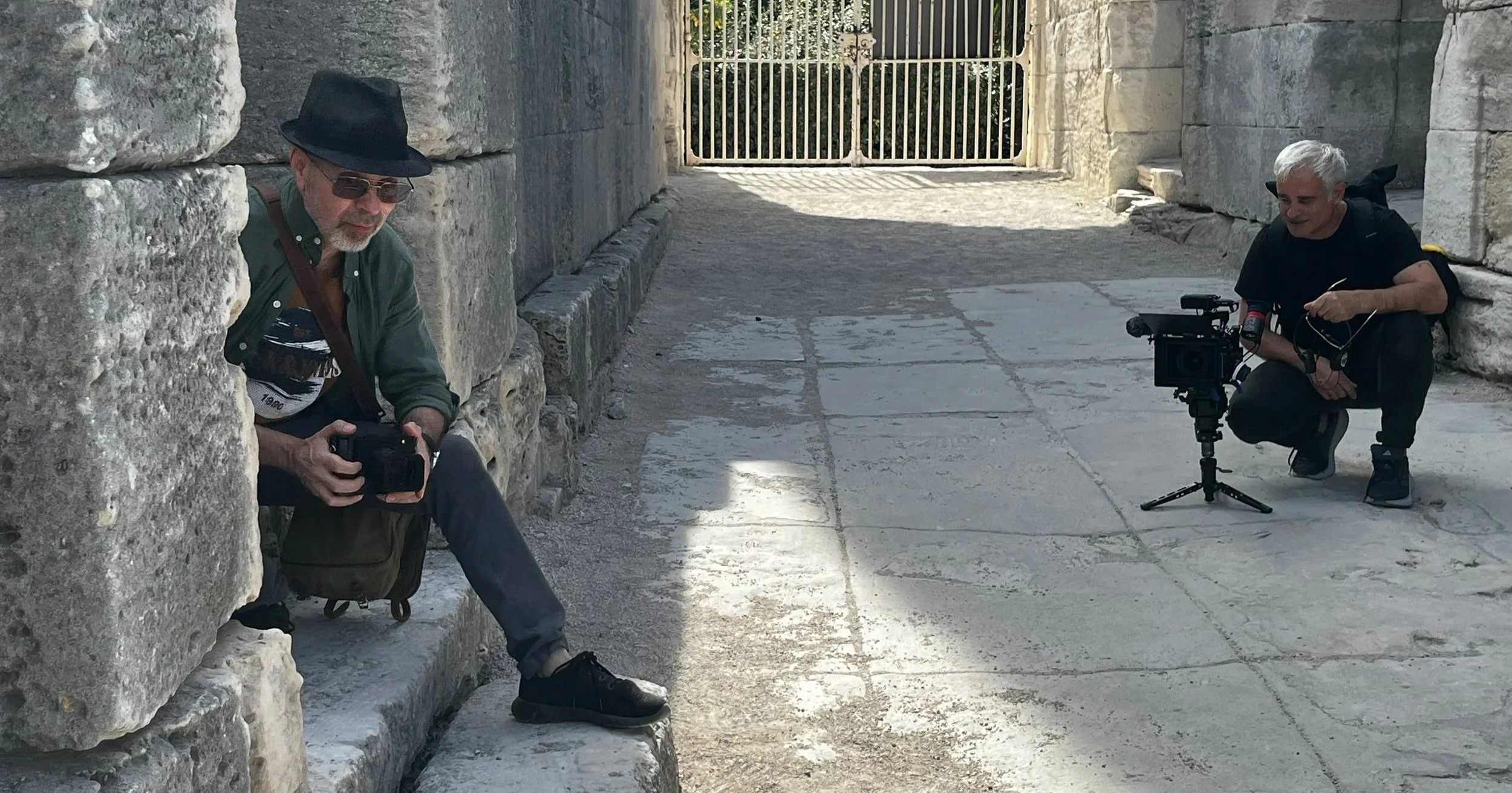
In Arles, we worked with a deliberately small crew of three. That decision was not only about budget; it was a creative and logistical choice. A compact team can move quickly, remain unobtrusive in public spaces, adapt to changing light, and travel between locations without the friction of a larger unit.
Despite the compact setup, we managed to shoot all the required footage in four days. That was possible because the equipment was carefully selected, the locations had been researched in advance, and every team member understood the visual goal of the project.
The A-camera was my Cine X Pro: a FUJIFILM X-H2S integrated into my fully rigged Cine Expansion Kit. This configuration turns a mirrorless camera into a more complete cine-style production tool, with the stability, accessory mounting, and operational control needed for serious filmmaking.
The B-camera was a FUJIFILM X-S20 fitted with the Mofage Poco II PL-mount adapter. This combination allowed us to use the Arles PL-mount lenses on a compact secondary body, giving us flexibility for additional angles, handheld work, and fast setups without compromising the visual language of the film.
These two are a perfect combination as both cameras record 6,2k open gate 10bit F-Log2 C footage.
Reliable Data Handling
On a four-day shoot, image data is not an afterthought—it is the production’s most valuable asset. For that reason, Angelbird was another essential partner.
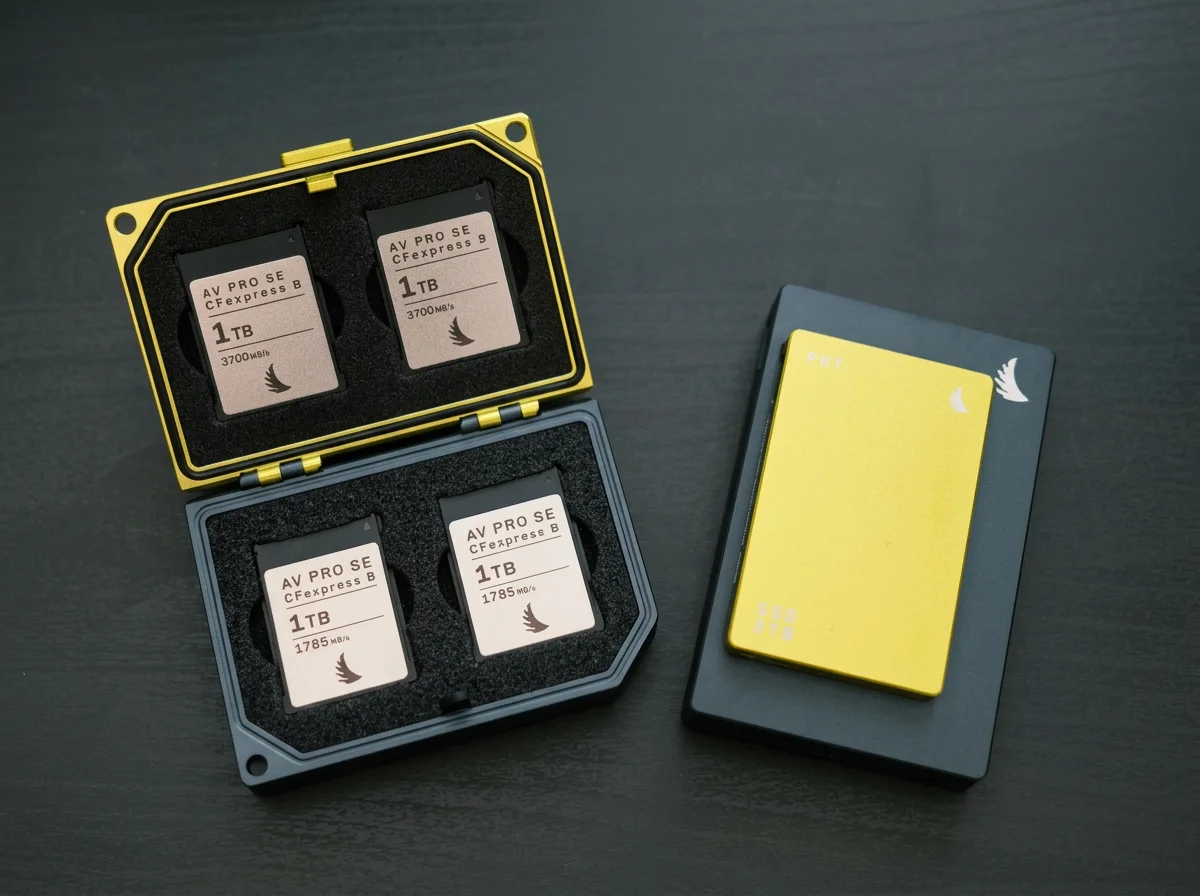
We used Angelbird’s high-speed CFexpress Type B and SD cards for recording, along with SSD2GO drives for immediate on-location backup. Their robust, professional storage solutions gave us confidence that every take was protected from the moment it was recorded.
For post-production on site, the Angelbird Performance Card Reader CFexpress B became a particularly useful tool. It is actively cooled, built for high-speed workflows, and supports transfer speeds of up to 40 Gb/s over USB-C 4.0. Most importantly, it allowed us to work directly from the memory card as a fast external drive in DaVinci Resolve.
This changed the rhythm of the shoot. Instead of waiting until the end of the day to copy and organise footage, we could review, organise, and begin editing with greater confidence while still in Arles. For a small crew working to a tight schedule, that immediate access to footage is a major advantage.
Sound with Intention
Visual storytelling depends on sound just as much as image. For Arles, we used the Atomos Studio XLR microphone together with the TASCAM FR-AV2 recorder, complemented by the Hollyland LARK MAX and LARK MAX 2 wireless microphone systems.
The TASCAM FR-AV2 is a compact camera-mounted recorder with two XLR/TRS combo inputs, Ultra-HDDA preamps, 32-bit float recording, timecode generation and synchronisation, and optional Bluetooth monitoring. Its dual ADC design and 32-bit float recording provide a wide safety margin in unpredictable real-world recording situations.
That reliability was important in Arles, where ambient sound is part of the story: footsteps on stone, distant voices, traffic, wind, café conversation, and the particular acoustic character of old European streets. Capturing clean production sound gives the edit and sound design far more to work with later.
Wireless Dialogue Capture
For interviews, spoken observations, and situations where a camera-mounted microphone was not practical, we used the Hollyland LARK MAX and LARK MAX 2 wireless microphone systems. They gave us a compact, dependable way to capture clear dialogue while keeping the crew mobile through Arles’ streets and public spaces.
The LARK MAX is an all-in-one wireless lavalier system with Hollyland’s MaxTimbre microphone technology and advanced ENC noise cancellation. Its omnidirectional microphone records 48 kHz/24-bit audio, handles up to 128 dB SPL, and offers a 70 dB signal-to-noise ratio. Each transmitter also includes 8 GB of internal storage for up to 14 hours of uncompressed WAV backup recording—an important safety layer when working outdoors.
With a wireless range of up to 250 m line of sight, adaptive frequency hopping, magnetic attachment, and a transmitter battery life of around 7.5 hours—extendable to 22 hours with the charging case—the LARK MAX was a practical choice for a small, fast-moving crew.
The LARK MAX 2 Advantage
The newer LARK MAX 2 added even more confidence for dialogue-heavy moments. It is a 32-bit full-chain wireless microphone system with internal 32-bit float recording, AI-driven noise cancellation, frame-level timecode synchronisation, and low-latency wireless monitoring.
Its transmitters weigh just 14 g, include 8 GB of onboard storage for up to 14 hours of high-quality backup audio, and can also function as standalone voice recorders. The system supports up to four transmitters with one receiver, making it especially useful for multi-person scenes, interviews, or spontaneous encounters in the city.
For Arles, the AI noise cancellation was particularly valuable. The system can reduce wind, traffic, and room reverberation by up to 25 dB with less than 1% distortion, while its 2.4 GHz frequency-hopping transmission helps maintain stable audio in crowded environments.
The LARK MAX 2 also offers a 340 m line-of-sight range, 128 dB maximum SPL, a 20 Hz–20 kHz frequency response, and up to 36 hours of operating time with its charging case. Its built-in timecode system synchronises camera footage and internal audio through 3.5 mm and UAC outputs, saving valuable alignment time in post-production.
A Flexible Audio Setup
Together, these tools created a flexible audio workflow:
TASCAM FR-AV2: Primary camera-mounted recorder for robust, timecoded production sound.
Atomos Studio XLR: High-quality microphone input for controlled dialogue and ambient recording.
Hollyland LARK MAX: Compact wireless lavalier capture with onboard backup recording.
Hollyland LARK MAX 2: Advanced 32-bit float wireless dialogue capture, AI noise reduction, timecode, and multi-person capability.
This combination allowed us to prioritise clean, usable sound without turning a three-person crew into a full audio unit. We could capture both the intimacy of a voice and the atmospheric reality of Arles—then bring those elements together during sound design and the final mix.
What Comes Next
The shoot is complete, but the film is now entering its most delicate phase: color grading, original score, and sound design. The footage was recorded in FUJIFILM F-Log2 C, giving us a flexible foundation for a considered cinematic grade in DaVinci Resolve.
The next article will look at that post-production process: how we approach the F-Log2 C footage, build a consistent visual language across the A- and B-camera material, develop the color grade, and shape the sound and music into a finished short film.
Arles gave us its light, its textures, and its atmosphere. Now the task is to shape those elements into a film that feels as vivid in motion as the city felt in person.
